

|

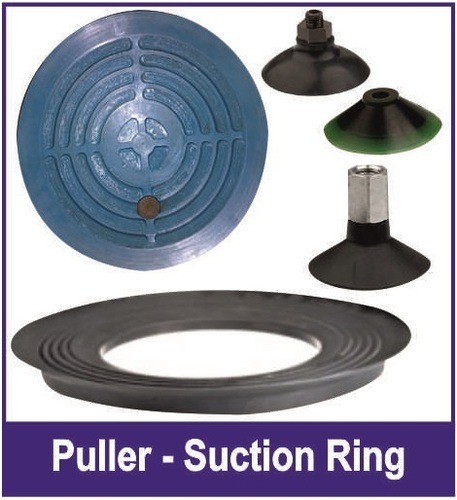
Suction Rings for Vaccum Lifters / Pullers
50 INR/Piece
Product Details:
- Material PU
- Usage & Applications Industrial
- Natural Rubber Yes
- Feature Light Weight
- Surface Finish Polished
- Diameter 2 to 4 mm Millimeter (mm)
- Click to View more
X
Suction Rings for Vaccum Lifters / Pullers Price And Quantity
- 100 Piece
- 50 INR/Piece
Suction Rings for Vaccum Lifters / Pullers Product Specifications
- PU
- Polished
- 2 to 4 mm Millimeter (mm)
- Industrial
- Yes
- Light Weight
Suction Rings for Vaccum Lifters / Pullers Trade Information
- 10000 Piece Per Day
- 7 Days
- All India
- ISO 9001:2015
Product Description
Suction Rings For Vaccum Lifters
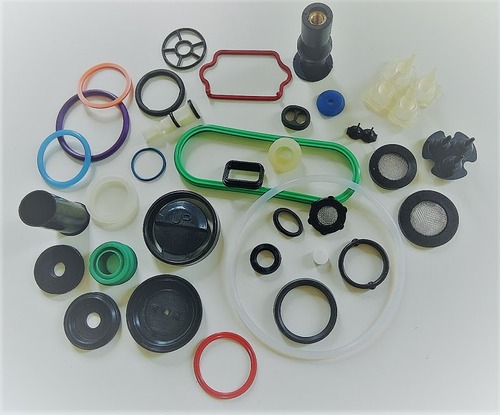
- Special Parts According To Samples / Drawing:
- Upon Request We Produce Special Parts According To Samples & Drawing.
- Depending On The Product Type To Produce And On The Type Of Work, We Use Different Materials Including: Elastomers : Nbr, Silicone, Viton, Neoprene, Epdm, Hnbr, Sbr, Polyurethane, etc.
- The Parts Are Available In Various Hardness And Colours.
- We Also Have/Develop Elastomers For Special Applications.
- Please Contact Us For More Details
High-Performance Suction Rings for Industrial Vacuum Lifters
These suction rings excel in industrial environments, providing reliable gripping power for vacuum lifters and pullers. Crafted with polished finishes and natural rubber, the rings are engineered to withstand rigorous operational demands. Their lightweight construction facilitates easy installation and handling while offering secure and non-damaging contact with various materials.
Versatile Applications Across Industries
With diameters available from 2 to 4 mm, these suction rings are suitable for a wide range of industrial processes. Whether handling delicate surfaces or robust materials, they deliver optimal performance. Their PU and natural rubber composition ensures durability, adaptability, and consistent results even in high-frequency usage scenarios, making them ideal for use in manufacturing, packaging, and assembly operations.
FAQ's of Suction Rings for Vaccum Lifters / Pullers:
Q: How are suction rings for vacuum lifters and pullers used in industrial applications?
A: Suction rings are fitted onto vacuum lifters and pullers to provide a secure seal and grip on surfaces, allowing for the safe lifting and transport of materials in industrial settings. Their strong suction capability ensures efficient handling with minimal risk of damage.Q: What materials are the suction rings made from, and how does this benefit users?
A: These rings are manufactured from PU (polyurethane) and natural rubber. This combination offers excellent elasticity, wear resistance, and chemical stability, ensuring longevity and effective performance in tough industrial conditions.Q: When should you replace suction rings on vacuum lifters?
A: Suction rings should be replaced when you notice reduced suction strength, visible wear, or damage to the ring surface. Timely replacement maintains lifting efficiency and prevents operational interruptions.Q: Where are these suction rings commonly utilized?
A: They are widely used in manufacturing plants, packaging units, material handling facilities, and assembly lines, especially within industries that require precise and delicate lifting operations.Q: What is the process of installing suction rings on vacuum lifters?
A: Installation involves securing the suction ring onto the contact plate or the suction head of the vacuum lifter. Ensure the ring fits snugly and maintains an airtight seal for optimal performance. Regular inspection is recommended after installation.Q: How does the lightweight feature of these rings provide a benefit?
A: The lightweight design of the rings ensures easy handling and quick installation, reducing labor time and improving operational safety. It also minimizes the weight added to the lifting mechanism, enhancing overall efficiency.Tell us about your requirement

Price:
Quantity
Select Unit
- 50
- 100
- 200
- 250
- 500
- 1000+
Additional detail
Mobile number
Email

Other Products in 'RUBBER PRODUCTS' category




PARAKH RUBBER HOUSE
GST : 07AEVPC6067Q2ZL
GST : 07AEVPC6067Q2ZL
Contact Details

- NJ-140, Sector - 3, DSIDC, Bawana Industrial Area,Delhi - 110039, India

- Phone :08045815733

- Mr Raman Chopra (Proprietor)
- Mobile : 08045815733


 Send Inquiry
 |
PARAKH RUBBER HOUSE
All Rights Reserved.(Terms of Use) Developed and Managed by Infocom Network Private Limited. |
